Low-Stimulation TV Shows for Toddlers: Calm Screen Time Ideas That Actually Help
(Gentle screen options for calmer minds and happier routines)
As parents, we all know that screen time can be both a lifesaver and a guilt trigger. On the days when you just need to prep dinner, settle your baby for a nap, or get through a long car ride—turning on a show can feel like the easiest option.
But not all shows are created equal—especially when it comes to our toddlers’ developing brains. That’s where low-stimulation TV comes in. These shows are slower-paced, use softer colors and gentle sounds, and are designed to soothe rather than overstimulate. Think Daniel Tiger’s Neighborhood instead of Cocomelon—still entertaining, but without the chaos.
What “Low-Stimulation” Really Means
Low-stimulation doesn’t mean boring—it means balanced.
These shows avoid:
- Rapid scene cuts or flashing transitions
- Overly bright, saturated visuals
- Loud sound effects or constant background noise
Instead, they focus on:
- Slow pacing and predictable rhythms
- Gentle music and natural sounds
- Emotionally warm, simple storylines
The result? A calmer viewing experience that supports focus, comprehension, and emotional regulation—all key skills in early childhood development.
A Personal Note from Me
I’m no child development expert or professional, but as a mom of two young kids, I’ve watched how their behavior changes based on what they watch.
When my toddler watches something fast-paced and loud, I can see the difference almost immediately—he gets hyper, distracted, and harder to settle afterward. But when we stick to calm, slower-paced shows like Daniel Tiger or Bluey, he stays more even-tempered and transitions better to playtime or meals.
It’s been eye-opening, and it’s the reason I created the “Low-Stimulation Kid Shows” guide—to help other parents notice the difference too.
In our home, we actually don’t watch TV all that often. As a work-from-home mom, I usually allow a little bit of screen time in the morning—just enough time for me to catch up on emails, schedule my day, or prep breakfast. In the afternoon, we have a dedicated quiet time since my toddler no longer naps (if he did, he’d be up until 11 p.m.!). During that half hour to hour, he can unwind with a calm show and a snack. It gives him space to rest after a morning of running, jumping, scootering, soccer, and practicing baseball—basically all the high-energy things he loves.
I’ve also discovered some hidden gems on Roku Live TV, including the Caillou Channel, Barney Channel, and Bob the Builder Channel. The old-school episodes of Barney especially surprise me—my almost-three-year-old absorbs so much from them. It never ceases to amaze me how he connects things he’s seen on Barney to real-life situations, remembering songs or ideas we’ve never directly talked about. It’s such a good reminder that kids are constantly learning, even when we think they’re “just watching TV.”
Encouraging Quiet Time – Beyond the Screen
Quiet time is a golden opportunity during the day—for both kids and parents. It helps children learn to wind down, fosters independence, and gives them space to recharge. While screens can sometimes be part of quiet time, it’s important to remember that they aren’t the only option—or even the best one in many cases.
Creating a small, cozy library corner with a few favorite books or rotating story selections can invite your child to explore reading on their own. Busy books or quiet-time activity bins (you can find some great ones on Amazon) are another wonderful tool, especially for younger kids. These hands-on activities promote creativity, problem-solving, and fine motor skills—all while keeping little hands engaged without overstimulation.
By offering non-screen options like books and quiet play, you’re not only supporting your child’s development but also helping them learn how to self-soothe and enjoy their own company—skills that truly last a lifetime.
Why Toddlers Benefit Most
1. Their Brains Are Still Wiring
During the toddler years, neural pathways are forming at lightning speed. Overstimulation from fast, flashy media can actually disrupt that natural process—making it harder for kids to focus, play independently, or wind down for naps and bedtime.
2. They Learn Through Repetition
Low-stimulation shows often repeat songs, phrases, or scenarios, which helps toddlers process information more deeply. That’s why your child may ask to rewatch the same Daniel Tiger episode again (and again)—they’re practicing comprehension and emotional recall.
3. They Encourage Emotional Regulation
Calmer shows model emotional awareness and empathy. When Mister Rogers slows down to talk about feelings, or Bluey shows teamwork between siblings, kids learn to recognize and manage emotions in real life.
The Hidden Perks for Parents
Gentler shows also mean fewer meltdowns when it’s time to turn the TV off. Because these programs don’t spike dopamine the same way high-intensity cartoons do, kids transition more easily back to playtime, meals, or bedtime routines.
They’re also ideal for:
- Wind-down routines (before naps or bedtime)
- Travel days when your child is overstimulated
- Sick days or quiet time when you need peace
Curated Low-Stimulation Picks
From my Curated by JLS visual, here are some excellent options by platform:
PBS Kids
- Daniel Tiger’s Neighborhood
- Curious George
- Wild Kratts
- Dragon Tales
Disney+
- Bluey
- Doc McStuffins
Netflix
- Tumble Leaf
- If You Give a Mouse a Cookie
- Creative Galaxy
Yippee TV
- Pajanimals
- Ollie
- Paisley’s Corner
Roku Live TV
- Caillou Channel
- Barney Channel
- Bob the Builder Channel
🛍️ Shop the Quiet Time Setup
Turn quiet time into a cozy ritual with a few intentional touches:
- Toddler Floor Lounger
- HonestBaby Cotton Sweatsuit
- Snack Spinner
- Toddler Busy Book
- Daniel Tiger Neighborhood Mini Library
- Bluey Plush + Cozy Blanket
- Printable- Low Stimulation Shows for Toddlers
(Affiliate links — thank you for supporting Curated by JLS!)
Final Thoughts
Screens can absolutely have a place in a mindful, modern home—it’s all about what you choose.
Low-stimulation shows are like a soft blanket for your child’s senses, offering calm moments that nurture instead of overwhelm. They support emotional intelligence, patience, and creativity—all the qualities we want to see blossom in our little ones.
So next time you reach for the remote, choose calm.
You might just find yourself feeling more peaceful too.
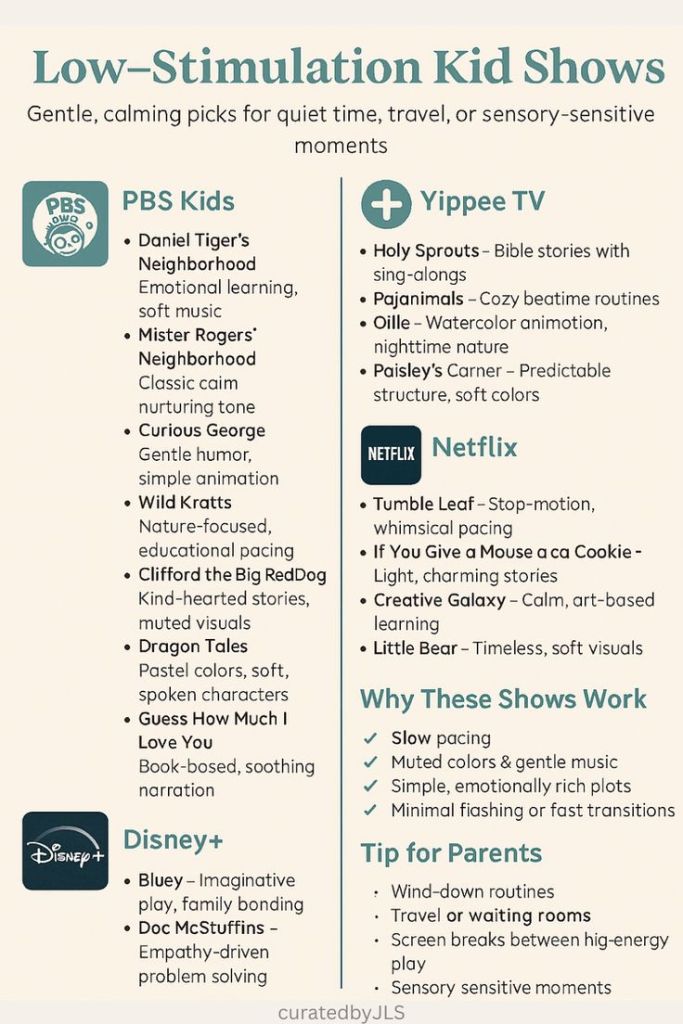







 Curated by JLS
Leave a comment